
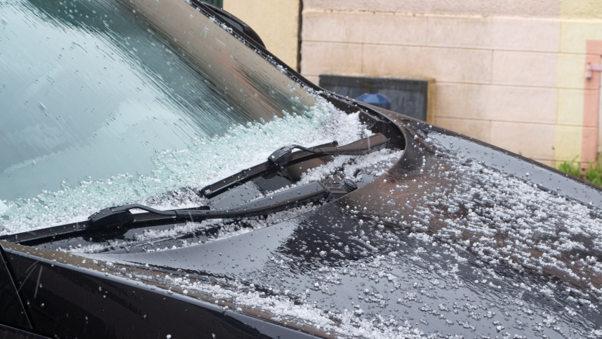
Hail Protection Covers in Canada | Outdoor Covers Canada
Posted by Outdoor Covers Canada on 12th Jun 2026
For prairie vehicle owners in Canada, hail protection covers are a worthy defence against costly repairs to car damage caused by this recurring weather pattern. The Canadian Prairies sit within one of North America's most active hail zones, and the financial fallout has grown year over year. It’s important for vehicle owners in Alberta, Saskatchewan, and Manitoba to understand how hail protection covers work, where a heavy-duty hail cover fits into a realistic protection strategy, and how to weigh the modest cost of a hail proof car cover in Canada against the far larger expense of repairs.
Key Takeaways
- Hail protection covers reduce cosmetic and structural damage from the small-to-moderate hail that accounts for most Prairie storms; they are a mitigation layer, not a guarantee against the largest stones.
- A padded vehicle cover for hail typically costs $200–$500, a fraction of a comprehensive insurance deductible (often $500–$1,000) or an uninsured repair bill.
- Alberta, Saskatchewan, and Manitoba all sit within Canada's "Hail Alley," with vehicles consistently representing the majority of hail insurance claims.
- The strongest return comes from pairing a cover with simple habits: monitoring weather alerts and parking under solid shelter when possible.
- A heavy-duty, multi-layer car hail cover is most effective for the frequent pea-to-coin-sized hail events, where it prevents the dents that lead to claims.
Why Hail Protection Covers Are Essential in the Canadian Prairies
Southern Alberta's "Hailstorm Alley,” which stretches roughly from High River through Calgary to Red Deer, is the most documented hail corridor in the country, but the risk does not stop at the provincial border. Saskatchewan and Manitoba regularly experience severe convective storms capable of producing large hail, damaging winds, and tornadoes, particularly across their southern regions.
What Causes Hail?
Hail forms when strong updrafts in a thunderstorm carry raindrops high into the atmosphere, where they freeze and accumulate layers of ice before falling. The Prairies' combination of summer heat, moisture, and steep atmospheric instability creates ideal conditions for these storms from May through September. and The Weather Network both track this severe weather across the region throughout the season, and the pattern is consistent: multiple significant hail events every summer.
Where Are Vehicles Most Exposed To Hail Damage
The damage is concentrated where vehicles are most exposed, such as driveways, open lots, and streets. After a major Calgary storm in 2025, the Insurance Bureau of Canada reported that vehicles represented about 65% of all claims resulting from the storm. That single figure explains why vehicle owners, more than almost anyone, benefit from a deliberate hail strategy.
The Cost of Hail Damage In Canada
The August 5, 2024 Calgary hailstorm is a clear example of the cost of hail damage. The Insurance Bureau of Canada, citing Catastrophe Indices and Quantification Inc., reported that total insured losses are now estimated to be C$3.25 billion, making it the second-costliest disaster in Canadian history for insured losses, resulting in more than 130,000 insurance claims.
Within that total, total insured damage to vehicles is now estimated to be nearly $1 billion, and roughly half of all damaged vehicles were total losses.
For context on how the risk has escalated, the same north Calgary area was hit in June 2020 by a hailstorm that resulted in $1.2 billion in insured losses. The IBC has noted that insured damage from hailstorms in Alberta over the past five years now stands at $6 billion, with the province experiencing at least one major hailstorm every year for the past two decades.
The lesson is not that a fabric cover would have prevented every one of those losses. The takeaway is that the typical hail event, the kind that dents a hood and cracks a tail light, is frequent, expensive, and largely preventable. That is the gap a cover is designed to close.
ROI Of Hail Protection Covers In Canada
Consider a straightforward comparison for a single moderate hail event:
- Comprehensive insurance deductible: Often $500–$1,000 out of pocket, plus the longer-term effect a claim can have on premiums.
- Uninsured cosmetic repair: Paintless dent removal for moderate hail damage routinely runs into the thousands.
- A padded vehicle cover for hail: A one-time cost of roughly $200–$500, reusable across many seasons.
Even if a quality cover prevents a single claim over its lifetime, it has paid for itself. Across the multiple hail events a Prairie summer can bring, the math compounds quickly. The same logic extends beyond vehicles. The cost of a heavy-duty cover is also minor compared to replacing a damaged patio set, barbecue, or other outdoor equipment.
|
Recovery Option |
Estimated Cost |
Frequency |
Hidden Costs & Long-Term Impact |
|
Heavy-duty hail protection cover |
$200 – $500 |
One-time purchase |
None. Reusable across multiple seasons; protects vehicle value. |
|
Comprehensive insurance deductible |
$500 – $1,000 |
Per claim |
Potential for higher future premiums; adds a claim record to the vehicle's history. |
|
Paintless dent repair (PDR) |
$1,000 – $4,000+ |
Per event |
Time without your vehicle during shop repairs; only works if the paint isn't cracked. |
|
Vehicle repaint or panel repair |
$3,000 – $10,000+ |
Per event |
Permanent loss of factory paint finish; significantly lowers resale value; long shop wait times. |
What To Expect From A Heavy-Duty Hail Protection Cover
Where Hail Protection Covers Perform Well
A multi-layer, padded cover absorbs and disperses the impact energy of small-to-moderate hail — the pea, marble, and coin-sized stones that make up the majority of hail events on the Prairies. For these storms, a good cover is the difference between an unblemished panel and a hood full of dents.
Where Limitations Begin
Let's be candid: no fabric cover can be marketed as making a vehicle completely immune to the most catastrophic hail. When stones reach golf-ball, hen-egg, or baseball sizes, often arriving with high winds, a cover serves to reduce damage rather than completely eliminate it. However, that doesn't mean you are left defenseless.
How Hail Protection Covers From Outdoor Covers Canada Are Engineered
Outdoor Covers Canada provides heavy-duty hail covers designed to perform to rigorous specifications, maximizing your protection and mitigation during severe Prairie storms. These covers are engineered with targeted defense mechanisms:
- Advanced 3-Layer Technology: Built specifically for maximum impact absorption and scratch protection.
- 5mm EVA Foam Core: A thick layer of dense EVA foam dedicated entirely to absorbing the kinetic energy of falling hail.
- Soft Cotton Lining: Rests gently against your vehicle to protect the paint finish from friction and scratching.
- Lightweight Silver Shield Lower: Provides durable, weather-resistant protection for the lower half of the vehicle.
- Comprehensive Vehicle Coverage: Designed to cover and protect the top, windows, mirrors, front grill, and rear tail.
- High-Wind Security: High winds challenge any cover's fit, which is why these feature an elasticized hem, heavy-duty straps, and buckles for a secure, form-fitting hold.
- Air Dissipation Vents: Built-in vents allow trapped air to escape, preventing the cover from billowing or acting as a parachute during heavy storm gusts.
- High Visibility Seams: Ensures the cover and your vehicle remain visible in low-light and heavy storm conditions.
What to Look For in a Quality Cover
- Multiple layers with genuine padding: The cushioning layer does the work of absorbing impact. Thicker, denser padding offers more protection.
- A secure, snug fit: Straps, tie-downs, or an elasticated hem keep the cover in place during the wind that usually accompanies hail.
- Weather-resistant outer fabric: Prairie storms bring rain and UV exposure as well as hail; the outer shell should handle all three.
- Correct sizing for your vehicle: A cover matched to your vehicle's dimensions performs far better than a loose, generic fit.
You can compare padded, heavy-duty options designed for Canadian conditions across our automotive covers collection.
Why Source Your Cover From a Canadian Specialist
Outdoor Covers Canada specializes in covers built and selected for these conditions. The broader case for covering a vehicle, such as protection from sun, debris, and weather as well as hail, is something we explore in our guide to the benefits of using a car cover to protect your car.
Building a Complete Hail Strategy
A cover is most effective as one part of a simple routine:
- Enable severe weather alerts through Environment and Climate Change Canada or The Weather Network so you have time to act before a storm.
- Park under solid shelter — a garage, carport, or covered structure — whenever it is available. This is the single best protection.
- Deploy your cover when solid shelter is not an option and a storm is forecast. The few minutes it takes to fit a cover is the action that prevents the damage.
- Confirm your insurance coverage. Hail damage to a vehicle is covered only under comprehensive auto insurance, not basic policies. Know your deductible and what you would actually pay out of pocket.
Premium Weather Defense for Prairie Vehicle Owners
Hail protection covers in Canada are becoming increasingly important as hail remains a permanent feature of life on the Canadian Prairies and storms continue to grow in both frequency and severity. A heavy-duty hail protection cover prevents the routine dents and cracks from the far more common hail events, at a cost that is a small fraction of a single insurance deductible or repair bill. For most Prairie vehicle owners, that is a sound, low-cost decision.
If you would like guidance on selecting the right cover for your vehicle and your region, our team is available to help. Contact us with your vehicle details and we will point you to the appropriate option.
Frequently Asked Questions
Yes, for the small-to-moderate hail that makes up most Prairie storms. A multi-layer padded cover absorbs and disperses impact energy, preventing the dents and cracks that lead to insurance claims. For very large hail, such as golf-ball sized and greater, a quality cover is effective at mitigating and reducing costly damage. It is best understood as effective mitigation, not a complete guarantee against every storm.
A quality padded vehicle cover for hail generally costs between $200 and $500, depending on vehicle size and construction. This is a one-time purchase reusable across many hail seasons. Compared to a comprehensive insurance deductible of $500 to $1,000, or an uninsured repair bill that can reach into the thousands, a cover typically pays for itself by preventing a single claim.
Hail damage to a vehicle may be covered under comprehensive auto insurance, but it’s not typically covered with basic liability coverage. Confirm your specific coverage and deductible with your car insurance provider before storm season helps you understand exactly what a cover could save you.
Southern Alberta sits in "Hailstorm Alley," where warm summer air, moisture, and steep atmospheric instability near the foothills create powerful thunderstorms with strong updrafts. These updrafts carry raindrops high enough to freeze into hail before they fall. Calgary's geography makes it especially prone, and the region has experienced major hailstorms nearly every year for two decades.
Hail as small as pea or marble size can chip paint and cause minor dents, while coin-sized stones reliably dent panels. Golf-ball-sized hail and larger, common in severe Prairie storms, can shatter windows, dent metal deeply, and write vehicles off entirely. A padded cover is most protective against the smaller and mid-range sizes that occur most often.
A heavy-duty padded cover significantly reduces damage from large hail but cannot guarantee a vehicle stays undamaged in the most extreme storms. When stones reach hen-egg or baseball size and arrive with high winds, some impact may still get through, and wind can stress any cover's fit. For these rare but severe events, solid shelter such as a garage remains the most reliable protection.
Yes. While Alberta's Hailstorm Alley is the most documented, southern Saskatchewan and Manitoba regularly experience severe thunderstorms producing large hail, damaging winds, and tornadoes. Provincial insurers in both provinces process hundreds of hail-related auto and property claims after major storms. Vehicle owners across all three Prairie provinces face meaningful, recurring hail risk each summer.
Without a garage, the most effective options are a heavy-duty padded hail cover and advance planning. Enable severe weather alerts so you can act before a storm, seek out a carport or covered parking when possible, and keep a properly fitted cover ready to deploy. Combining these steps offers strong protection for vehicles that are otherwise parked in the open.
Hail season in Canada typically runs from May through September, with the highest risk occurring during the summer months. Alberta experiences the greatest number of severe hailstorms, but Saskatchewan and Manitoba also experience frequent thunderstorms capable of producing damaging hail. Preparing your vehicle before storm season begins can help reduce the risk of costly repairs.
Yes. Hail protection covers are available for a wide range of vehicle types, including sedans, SUVs, pickup trucks, vans, and crossovers. Choosing the correct size ensures complete coverage of the roof, hood, mirrors, windows, and other vulnerable areas, providing the best possible protection during hailstorms.
Severe weather data in this article reflects figures published by the Insurance Bureau of Canada and reporting from The Weather Network and CBC News. For storm safety guidance, consult Environment and Climate Change Canada.